
Caribbean Cup of Tea · Caribbean Classroom
Dominican Republic
Home of the Caribbean's tallest mountain, its oldest European city, merengue and bachata.
Key facts
- Capital
- Santo Domingo 1,2
- Official language
- Spanish 1,2
- Currency
- Dominican peso (DOP) 1
- Independence
- 27 February 1844 (from Haiti) 1
- Government
- Presidential republic 1
- Population
- About 10.9 million (2025 estimate) 1
- Area
- About 48,670 sq km (18,790 sq miles) 1
- Highest point
- Pico Duarte, 3,098 m (10,164 ft), the highest in the Caribbean 1
- Motto
- “Dios, Patria, Libertad” (God, Fatherland, Liberty) 1
Did you know?
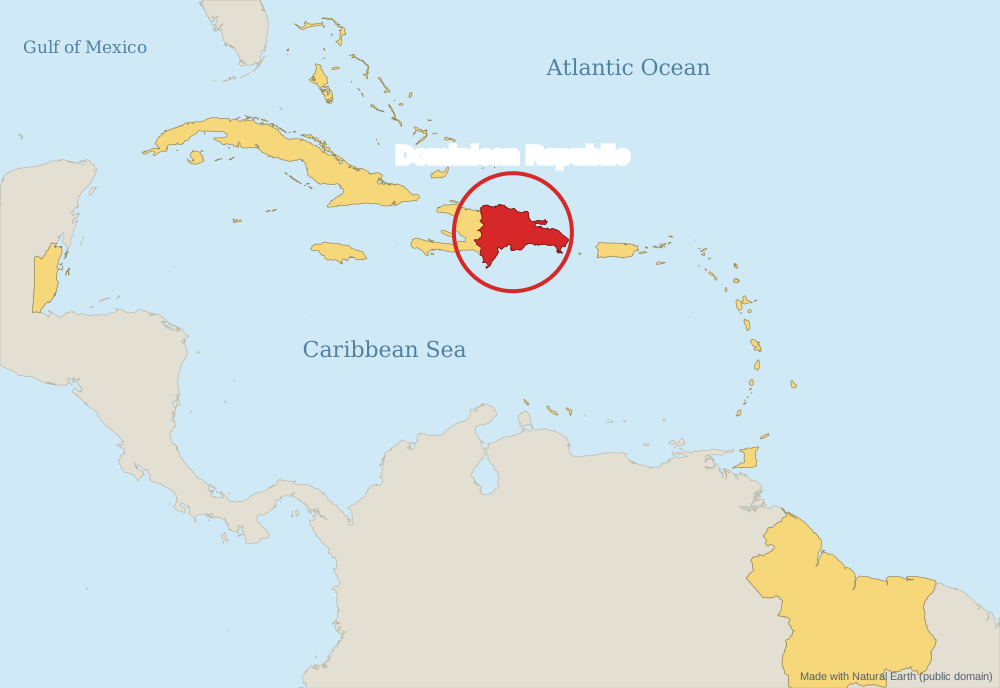
- The Dominican Republic shares the island of Hispaniola with Haiti. Its capital is Santo Domingo.
- People speak Spanish.
- Independence Day is 27 February. The country became independent in 1844.
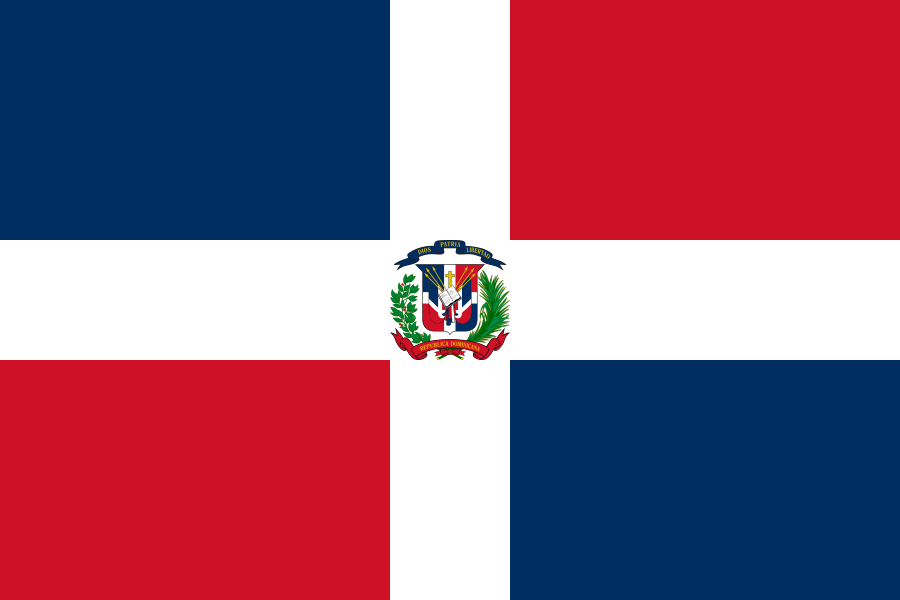
- The flag has a white cross with blue and red boxes.
- Pico Duarte is the tallest mountain in the whole Caribbean.
- Merengue and bachata are famous Dominican music and dance.
Key dates
- 1492 Christopher Columbus reaches the island the Taíno called Quisqueya.
- 1498 Santo Domingo is founded; it becomes the site of the first cathedral, hospital, customs house and university in the Americas.
- 1838 Juan Pablo Duarte founds the secret society La Trinitaria to work for independence.
- 27 February 1844 Independence from Haiti (Independence Day).
- 16 August Restoration Day, a national holiday remembering the Grito de Capotillo of 16 August 1863, which started the war that restored independence from Spain in 1865.
- 1990 The Colonial City of Santo Domingo becomes a UNESCO World Heritage Site.
- 2016 and 2019 UNESCO recognises merengue (2016) and bachata (2019) as intangible cultural heritage.
Symbols
- Flag: A white cross divides the flag into four rectangles: blue and red on top, red and blue below. In the centre is a coat of arms with an open Bible, the motto “Dios, Patria, Libertad” and the words “República Dominicana”. Blue stands for liberty, white for salvation and red for the blood of heroes.
- National bird: The palmchat (cigua palmera).
- National flower and tree: The Bayahíbe rose (flower) and the mahogany, or caoba (tree), named by Law 146-11.
- National stone: Larimar, a blue stone found on Hispaniola (Law 296-11).
- National anthem: “Himno Nacional”, also known as “Quisqueyanos valientes”, words by Emilio Prud'Homme and music by José Reyes, adopted in 1934.