
Caribbean Cup of Tea · Caribbean Classroom
Haiti
The first country in the world founded by people who freed themselves from slavery.
Key facts
- Capital
- Port-au-Prince 1,2
- Official languages
- Haitian Creole and French 1,2
- Currency
- Gourde (HTG) 1,2
- Independence
- 1 January 1804 (from France) 1,2
- Government
- Semi-presidential republic 1
- Population
- About 11.9 million (2025 estimate) 1
- Area
- About 27,750 sq km (10,700 sq miles) 1
- Highest point
- Pic la Selle, 2,674 m (8,773 ft) 1,2
- Motto
- “L'Union fait la force” (Union makes strength) 1,4
Did you know?
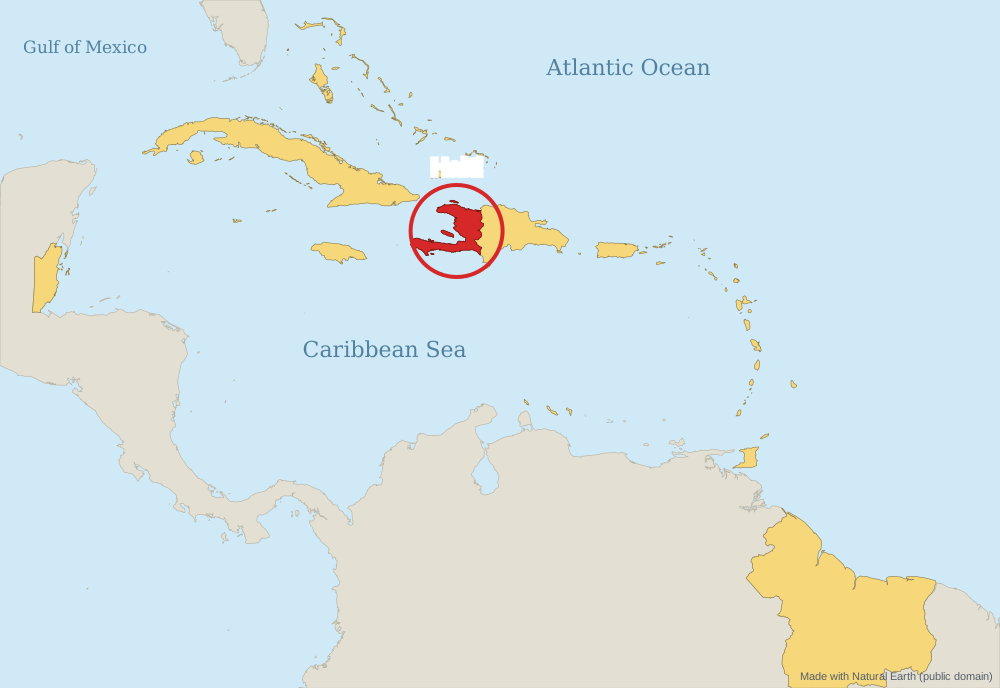
- Haiti is on the island of Hispaniola. It shares the island with the Dominican Republic.
- The capital is Port-au-Prince.
- People speak Haitian Creole and French.
- Haiti became free on 1 January 1804, after enslaved people won a long fight for freedom.
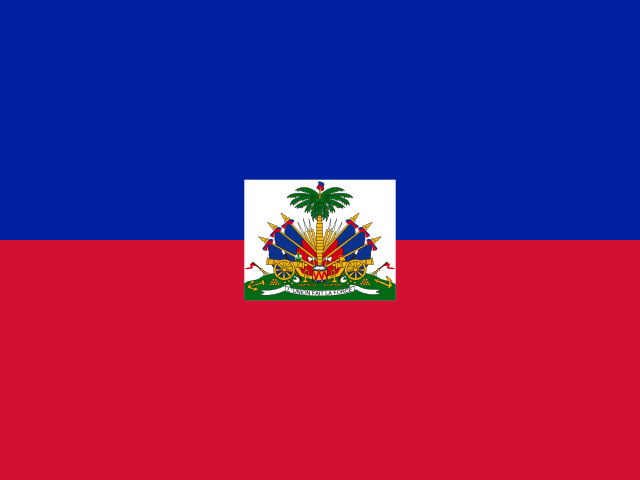
- The flag is blue and red, with the coat of arms in a white box.
- On New Year's Day, families eat joumou soup to celebrate freedom.
Key dates
- 1492 Christopher Columbus lands on Hispaniola, home of the Taíno.
- 1697 Spain gives the western third of Hispaniola to France; it becomes the colony of Saint-Domingue.
- 18 May 1803 At the Arcahaie Congress, Jean-Jacques Dessalines creates the first Haitian flag. Haitians celebrate Flag Day on 18 May.
- 18 November 1803 French troops surrender at Vertières.
- 1 January 1804 Independence Day. Haiti becomes the first country led by formerly enslaved people.
- 1982 The National History Park (Citadel, Sans Souci, Ramiers) becomes a UNESCO World Heritage Site.
- 12 January 2010 A catastrophic earthquake strikes near Port-au-Prince.
- 2021 UNESCO recognises joumou soup as intangible cultural heritage.
Symbols
- Flag: Two equal horizontal bands of blue (top) and red, with a white rectangle in the centre showing the coat of arms. The colours come from the French flag and stand for the union of Haiti's peoples.
- Coat of arms: A palm tree topped by a liberty cap, with flags and cannons, above a scroll reading “L'Union fait la force”.
- National symbols: The Hispaniolan trogon (bird) and the hibiscus (flower).
- National anthem: “La Dessalinienne” (The Dessalines Song), words by Justin Lhérisson and music by Nicolas Geffrard, adopted in 1904 and named after Jean-Jacques Dessalines.