
Caribbean Cup of Tea · Caribbean Classroom
Trinidad and Tobago
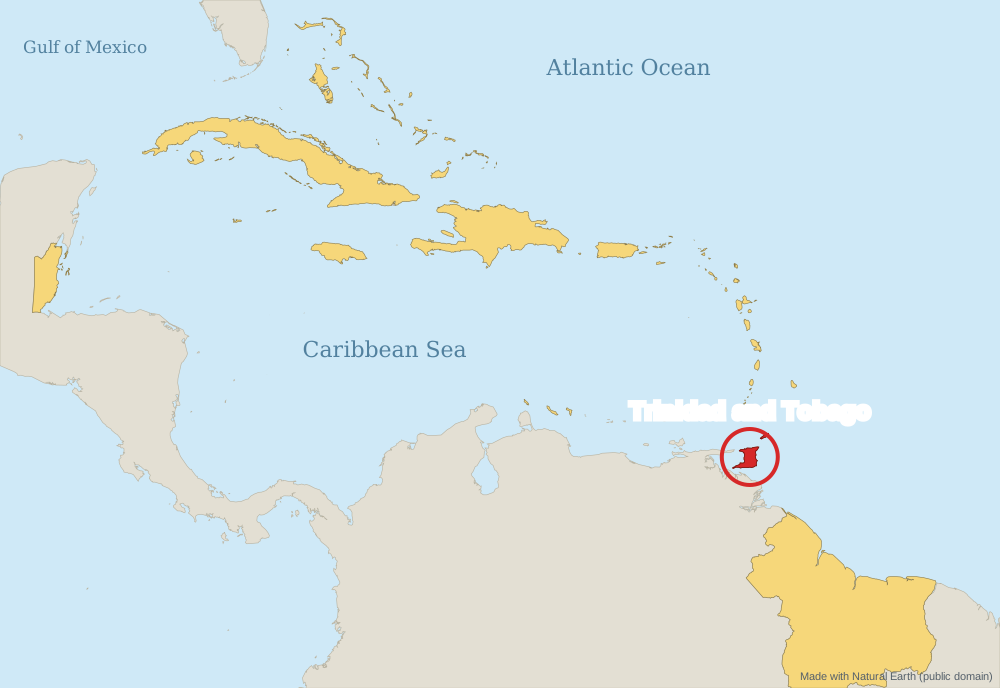
The twin-island republic that gave the world the steelpan, just off the coast of South America.
Key facts
- Capital
- Port of Spain 1,2
- Official language
- English (Trinidadian and Tobagonian Creole English are widely spoken; others include Caribbean Hindustani, French Creole and Spanish) 1,2
- Currency
- Trinidad and Tobago dollar (TTD) 1,2
- Independence
- 31 August 1962 (from the United Kingdom) 1,2
- Government
- Parliamentary republic (since 1976) 1,2
- Population
- About 1.4 million (2025 estimate) 1
- Area
- 5,128 sq km (1,980 sq miles) 1,2
- Highest point
- El Cerro del Aripo, 940 m (3,084 ft) 1,2
- Motto
- “Together we aspire, together we achieve” 3
Did you know?
- Trinidad and Tobago is a country made of two main islands. Its capital is Port of Spain.
- It became independent on 31 August 1962.
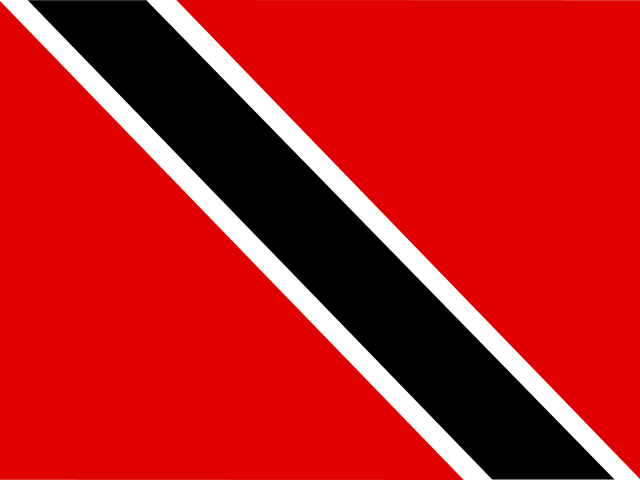
- The flag is red, with a black stripe edged in white.
- The national birds are the scarlet ibis and the cocrico.
- The steelpan was invented here. It is the national instrument.
- Carnival is a giant festival of music and costumes.
Key dates
- 1498 Christopher Columbus names the larger island “La Isla de la Trinidad” (the Island of the Trinity).
- Early 1800s Britain takes control of Trinidad from Spain.
- 1834 Emancipation of enslaved people.
- 1845–1917 Contract workers arrive from India.
- 1910 Oil is discovered on Trinidad.
- 31 August 1962 Independence from the United Kingdom (Independence Day).
- 1976 Trinidad and Tobago becomes a republic; Hasely Crawford wins the country's first Olympic gold medal.
- 2024 The steelpan officially becomes the national instrument.
Symbols
- Flag: Red with a white-edged black diagonal band from the upper left to the lower right. The colours stand for earth, water and fire: black for the wealth of the land and the dedication of the people, white for the sea and equality, and red for the sun and the people's courage and friendliness.
- National birds: The scarlet ibis (for Trinidad) and the cocrico (for Tobago). Both appear on the coat of arms and are protected by law.
- National flower: The double chaconia, a flaming red forest flower also called the Pride of Trinidad and Tobago.
- National instrument: The steelpan, invented in Trinidad and Tobago, with its early development in the 1930s and 1940s.
- National anthem: “Forged From the Love of Liberty” by Patrick Castagne, adopted in 1962. It was first written as an anthem for the West Indies Federation.